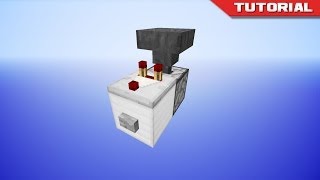
Video: This Unlocks So Much Potential... - WTH Is a Monostable Circuit?? by jazziiRed
How to build it
- Design 1: Comparator Monostable (Setup)
Place your input button or lever leading into a line of redstone dust. Run that dust directly into the back of a redstone comparator.
- Design 1: Subtract Loop
Right-click the comparator to turn on its front torch (subtract mode). Branch the input redstone line around to the side of the comparator using a repeater set to 2 ticks, so it cancels the signal right after it turns on.
- Design 2: Classic Sticky Piston Breaker
Dig a one-block hole and place a sticky piston facing up with a solid building block on its head. Place redstone dust next to the solid block (just above the piston) so the dust powers both the block and the piston below it.
- Design 2: Output Repeater
Place a redstone repeater facing away from the solid block on the piston. When triggered, the repeater grabs a 1-tick pulse just before the piston pushes the block upward and cuts the connection.
- Design 3: Dropper-Hopper Monostable
Place a dropper facing straight up and crouch-place a hopper on top of it pointing straight down into the dropper. Put a single random item inside the dropper.
- Design 3: Reading the Hopper
Run your input redstone into a block adjacent to the dropper, and place a comparator reading out from the upper hopper. When powered, the dropper shoots the item up and the hopper immediately returns it, creating a brief pulse.
- Design 4: Torch and Repeater Cancellation
Run your input dust into a solid block that has a redstone torch attached to it, and place a 3-tick repeater next to the block running in parallel. Merge both lines into the same dust wire leading to a second inverting torch, which will blink briefly during the timing gap.
- Design 5: Piston Cut-Off Circuit
Run a repeater into a solid block that powers both a sticky piston and a redstone line dropping down into a 1-block trench. Position the piston so that when it extends a block, it physically cuts off the redstone dust wire after a split second.
- Design 6: Modern Piston-Observer
For the most compact rising-edge design, attach an observer directly to the face of a sticky piston. Place your output dust or mechanism where the observer's output dot will land once the piston is fully extended.
- Converting to Falling or Dual Edge
To trigger on the falling edge (when power turns off), either invert the input with a redstone torch or move your output to the retracted position of the Piston-Observer design. For a dual-edge pulse that fires on both on and off, simply point a single stationary observer at a redstone line.
How it works
The term monostable means the circuit only has one stable state: OFF. When an incoming signal pushes the circuit into its unstable ON state, internal mechanics immediately force it back off, regardless of how long the input stays powered.
- Comparator Subtract Design: The comparator takes 1 redstone tick to turn on. Because a 2-tick repeater feeds full signal strength into its side in subtract mode, the signal is subtracted to zero 1 tick after turning on.
- Piston & Observer Designs: Moving a powered block (or pushing an observer) takes advantage of piston extension time. The output receives power for a single tick before the block moves out of alignment—or in the observer's case, fires a 1-tick pulse the instant it finishes moving.
- Rising, Falling, and Dual Edge: Rising edge circuits fire at the start of an input (OFF to ON). Falling edge circuits fire at the end of an input (ON to OFF). Dual edge circuits fire twice—once when powered and once when unpowered.
Tips & variations
- 1-Tick Block Dropping (Java Exclusive): In Minecraft Java Edition, feeding a 1-tick pulse from the Classic Sticky Piston or Piston-Observer monostable into another sticky piston causes it to spit out its block and leave it behind. Triggering it again pulls the block back, making an easy T Flip-Flop toggle.
- Preventing Double Triggers: Use a rising-edge monostable circuit to shorten long pulses (such as from a Sculk Sensor or wooden button) before sending them into observer chains.
- Easy Falling Edge: You can turn almost any rising-edge monostable circuit into a falling-edge circuit simply by placing a block with a redstone torch before the input to invert the signal.