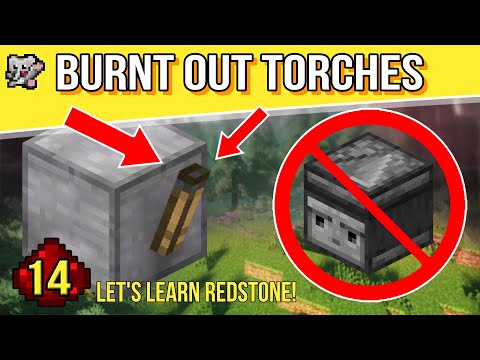
Video: Burnt Out Torch Replaces Observers | Let's Learn Redstone 14 | Minecraft Tutorial by OmLedu
How to build it
- Place the Base Block
Place one solid building block on the ground where you want your circuit or detector to sit.
- Attach the Redstone Torch
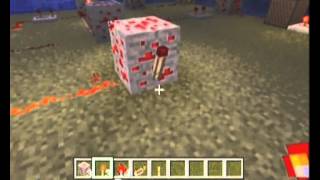
Place a redstone torch on the side of the base block. For crop or wool farms, position this torch directly adjacent to the grass block or the air space where the plant will grow.
- Place the Ceiling Block
Place a second solid block directly above the redstone torch so the torch strongly powers it from below. In a wool farm, you can use an upward-facing or inward-facing dispenser directly in this spot.
- Add Redstone Dust to Burn Out the Torch
Place one piece of redstone dust on top of the base block. The torch will power the top block, which powers the dust, which immediately turns off the torch in a rapid loop until it hisses and burns out.
- Connect Your Farm Output
Run your output from the redstone dust or use the top block as a powered component (like a dispenser with shears, or wire it to pistons for sugarcane and bamboo). Whenever a block next to the torch updates, the clock will fire a rapid burst of pulses.
How it works
When you place a solid block directly above a side-mounted redstone torch, the torch strongly powers that ceiling block. That block in turn powers the redstone dust sitting on top of the block the torch is attached to.
- Because the base block is now powered by the dust, the redstone torch is forced to turn off.
- As soon as the torch turns off, the ceiling block and the redstone dust lose power, allowing the torch to turn back on.
- This creates an instant feedback loop with zero delay. After flashing rapidly (producing 7 activations on Bedrock Edition), the game forces the torch into a "burnt-out" state to prevent lag.
- While burnt out, the torch acts like a 6-sided block update detector. Any block update on any of the six faces surrounding the torch—such as a sheep eating grass, grass regrowing, bamboo/sugarcane growing beside it, or a piston moving—wakes the torch up, causing it to fire another 7-pulse burst before burning out again.
Tips & variations
- Cheap Observer Alternative: You don't need Nether quartz to automate early-game farms. Because the torch detects updates in all 6 directions, a single burnt-out torch placed between two grass blocks can detect and shear two separate sheep pens.
- Crop Farm Spacing: In sugarcane or bamboo farms, the torch must sit in front of or next to the growing plant block to feel the update, which slightly reduces planting density. Placing one torch every 3 to 4 plants is a great balance between efficiency and space.
- Top-Mounted Variant: If you place a torch on top of a block instead of the side, you can still burn it out by looping redstone dust around into the base block, or by placing a Target block to redirect the dust back into the base block.
- Preventing Burnout (Standard Clock): On Bedrock Edition, adding just a single Redstone Repeater or Redstone Comparator into the loop adds enough delay that the torch will never burn out, giving you a simple continuous clock. On Java Edition, torches still burn out even on slower clocks and require a longer delay.
- World Load Trigger: Burnt-out torches automatically refresh and fire once whenever you load into the world. This is harmless (and even helpful) for harvesting crops or shearing sheep, but if you use the 7-pulse burst for a prize dispenser, add a fail-safe so it doesn't dispense items every time you log in.