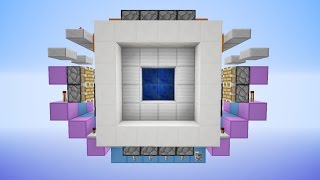
Video: Minecraft Bedrock - Vault Door Tutorial by Derpy Jhomes
How to build it
- Lay the Immovable Floor Base
Dig a 5-block wide trench where the bottom of your door frame will sit. Fill those 5 spots with immovable blocks such as glazed terracotta or obsidian so the slime and honey blocks won't grab the floor.
- Build the Slime and Honey Door Panels
On the right side of the doorway, place an L-shaped cluster of slime blocks, and on the left side place a matching interlocking cluster of honey blocks so the two halves meet in the middle without sticking together. Attach your decorative door blocks to the front faces of both the slime and honey blocks.
- Place the Double Piston Extenders
On the right side, leave a 1-block gap away from the slime blocks and place two horizontally facing sticky pistons one right behind the other, aligned with the middle of the slime cluster. Repeat the exact same setup on the left side with two sticky pistons facing the honey blocks.
- Build the Front Wall and Lever Input
Frame out the front wall around your doorway using your wall blocks. Place a lever on the right side of the front wall to control the door.
- Wire the Right Double Piston Extender
Behind the lever, place building blocks to support the redstone beside the right-hand pistons. Place a repeater set to 3 ticks (tap twice) pointing into the back piston position, run redstone dust around the side, and place an immovable block with a 1-tick repeater and redstone dust on top to power the front extension.
- Run the Redstone Line Under the Floor
Break the floor blocks directly underneath the lever and place redstone dust there so the lever powers downwards. Dig a shallow trench across to the left side of the door, making sure to clear out any dirt directly touching the underside of the sticky pistons.
- Wire the Left Double Piston Extender
Connect the underground redstone trail up to the left-side pistons using a repeater to boost the signal. Mirror the exact same double piston extender wiring on the left side using a 3-tick repeater (tapped twice) and a 1-tick repeater with dust running along four support blocks.
- Cover the Floor with Slabs and Immovable Borders
Cover the underground redstone line with floor blocks, using a top slab right above the vertical redstone connection so you do not cut off the wire. Finally, place three immovable blocks along the inner floor and ceiling edges next to the slime and honey travel path so the door never sticks to your hallway walls.
How it works
This door works by pairing two horizontal double piston extenders with the non-stick property between slime blocks and honey blocks:
- Double Piston Extenders: Each side has two inline sticky pistons. When you flick the lever ON, a 1-tick repeater powers the rear piston first while a 3-tick repeater delays power to the front position, pushing the door blocks two spaces inward to close the vault.
- Retraction Sequence: When the lever is turned OFF, the back piston retracts first and the front piston pulses briefly to pull the slime or honey cluster all the way back into the wall.
- Slime & Honey Separation: Because slime blocks and honey blocks never stick to each other, the two halves of the door can slide right past one another into an interlocking pattern without jamming or exceeding the 12-block piston push limit.
- Immovable Framing: Glazed terracotta (or obsidian) lines the floor, ceiling, and adjacent circuit blocks so the sticky slime and honey only move the door face blocks.
Tips & variations
- Don't Cut the Wire: Where the underground redstone trail climbs up from beneath the lever, always use a top slab for the floor. A full solid block will sever the diagonal redstone dust connection.
- Clear Under the Pistons: If your left side gets stuck or misfires during testing, double-check that there are no regular blocks directly underneath the sticky pistons that could get grabbed by the slime or honey blocks.
- Immovable Block Choices: If you don't like the pattern of glazed terracotta, you can use obsidian, crying obsidian, furnaces, or droppers along the edges where the slime and honey move.
- Push Limit Warning: Keep your decorative door blocks within the 12-block piston push limit per side (counting the slime/honey blocks and the decorative front blocks combined).