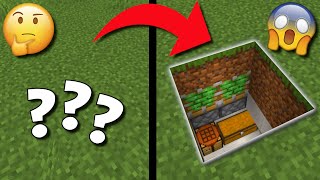
Video: Tiny 2x2 Hidden Piston Door [Flush & Seamless] by Mumbo Jumbo
How to build it
- Place the Bottom Floor Pistons
Clear a 6-wide by 3-deep workspace. In the center under your future doorway, place 2 sticky pistons facing upwards with your hallway floor blocks on top of them.
- Set Up the Side Jeb Door Pistons
On both the left and right sides of the doorway, build a 2x2 platform at floor level. Place 2 vertical sticky pistons facing the opposite side to push the door mechanism forward, and 1 sticky piston on their inner faces pointing into the doorway with a wall block attached.
- Fill the Vertical Block Columns
On both sides of the door, fill in solid building blocks in a vertical column above and below the single inward-facing sticky pistons. These columns allow the pistons and wall blocks to be shifted up and down like a block tape.
- Build the Top U-Shape Wiring
Above the doorway, build a U-shaped platform of blocks. Place redstone dust in the middle, two redstone repeaters set to 2 ticks each pointing outward toward the sides, and redstone dust on the outer blocks.
- Add the Top Downward Pistons
From the outer blocks of the top U-shape, step up one block on each side and place redstone dust on top. Underneath those outer positions, place 1 regular piston facing downwards on each side, aligned directly above the vertical columns containing your inward-facing sticky pistons.
- Add the Bottom Upward Pistons
Go to the bottom of the vertical columns on the left and right corners. Place 1 regular piston facing upwards at the base of each column so it can push the column back up when the door opens.
- Install the Bottom Monostable Pistons
Underneath the main side sticky pistons on the left side, place a sticky piston facing downwards with a Block of Redstone on its face, followed by a second downward sticky piston with a Block of Redstone beside it. Repeat this exact pair of downward sticky pistons and redstone blocks on the right side.
- Wire the Bottom Repeaters and Torches
On each lower side, place a block with redstone dust next to the redstone block assembly, feeding into a 1-tick repeater aimed into the bottom regular upward piston. Place a redstone torch on the side of the block to complete the falling-edge trigger.
- Connect the Lever and Frame the Wall
Attach a lever to power the top center redstone dust and flick it once or twice to sync the pistons. Fill in your surrounding wall and hallway floor blocks so all the circuitry is completely hidden.
How it works
This door combines a standard 2x2 Jeb door with a vertical piston feed tape / block swapper on each side to achieve the seamless look:
- Closing Sequence (Flush): When you turn the top input ON, the outer top dust powers the regular downward pistons first. They push the vertical columns down by one block, moving the inward-facing sticky pistons down into the doorway level. Two ticks later, the top repeaters power the rear pairs of sticky pistons (via quasi-connectivity), pushing the side sticky pistons and door blocks out into the wall frame and extending them flush with the wall.
- Opening Sequence (Seamless): When the lever is turned OFF, the side sticky pistons retract the door blocks back into the side walls. As the bottom downward sticky pistons depower, they pull their
Block of Redstoneupward. - Falling-Edge Swap: That retracting redstone block triggers a brief pulse through the bottom dust,
1-tickrepeater, and redstone torch arrangement. This fires the bottom upward regular pistons and the two under-floor sticky pistons, shifting the side columns up by one block so a solid wall block replaces the ugly piston face inside the hallway.
Tips & variations
- Repeater Timing:Keep the top repeaters at
2 ticksso the downward regular pistons finish shifting the column down before the main Jeb door pistons push everything forward. The bottom repeaters work best at1 tickfor a snappy opening sequence. - Initial Glitch Fix: When you first place the redstone torches at the bottom, one side may fire out of sync. Simply flick the main input lever on and off once to reset all columns into their proper states.
- Hidden Inputs: You do not have to keep the lever directly on the top wiring; run your hidden input line into the top center redstone dust.
- Java Edition Mechanics: This build relies heavily on quasi-connectivity to power the stacked door pistons from the top line and 1-tick/monostable behaviors, meaning it works in Minecraft Java Edition and will not function as built in Bedrock Edition.